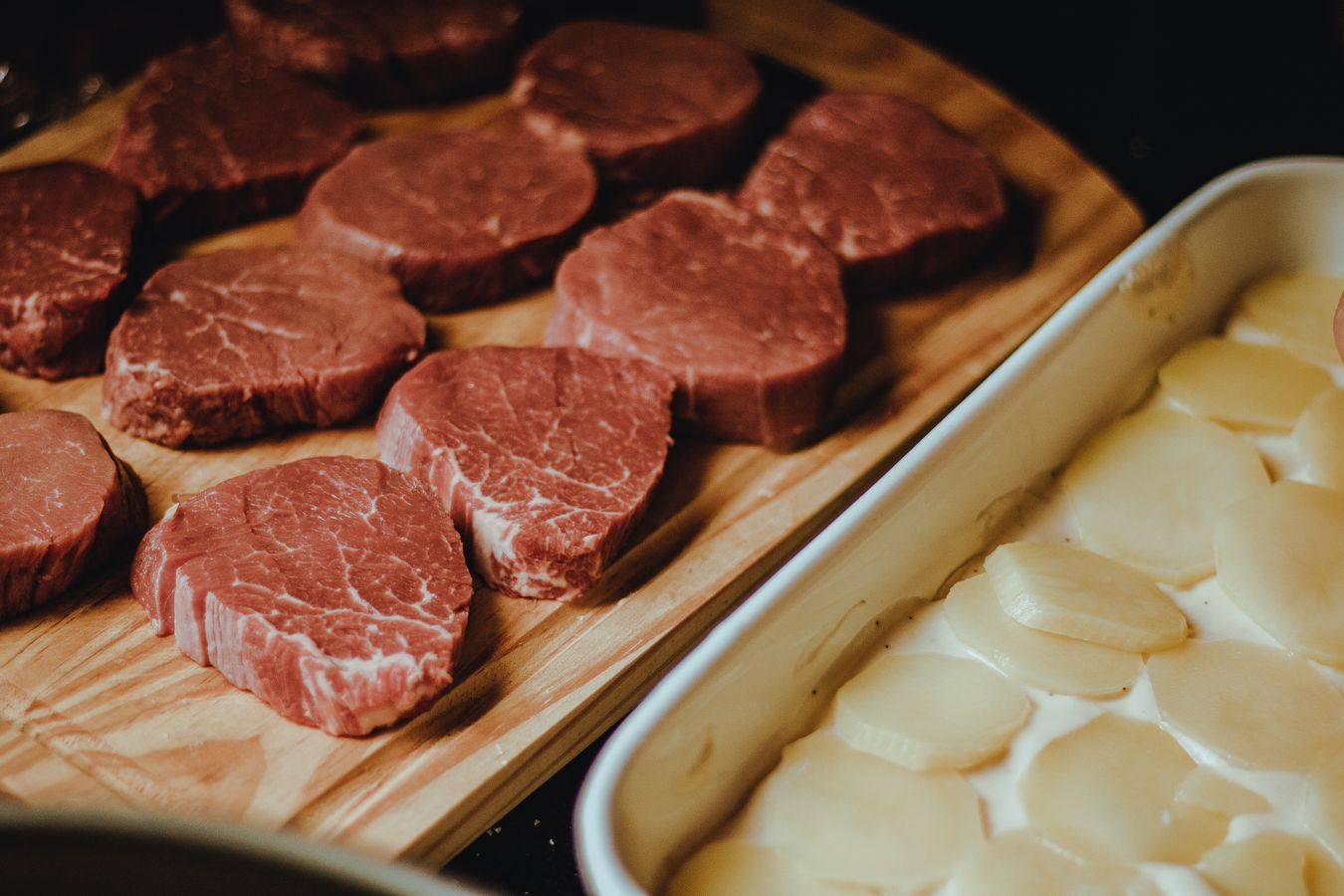

The convention is simple: red meat, red wine. The convention is mostly wrong. The convention works for Cabernet Sauvignon with a fatty ribeye because the tannin in the wine interacts with the fat in the meat in a way that makes both taste better. But beef is not just ribeye. Beef is also lean sirloin, aged porterhouse, slow-cooked brisket, carpaccio, tartare. The pairing changes.
The Principles
The pairing of wine with food works on three axes: weight (light wine with light food, heavy wine with heavy food), acidity (high-acid wine cuts fat and richness), and tannin (tannic wine needs fat or protein to soften it).
Steak is heavy. It needs a wine with weight. But not every steak is fatty, and not every steak needs tannin.
The Rules
- Fatty cuts (ribeye, T-bone) → tannic wine (Cabernet Sauvignon, Barolo, Bordeaux blend)
- Lean cuts (sirloin, tenderloin) → medium-bodied wine with acidity (Sangiovese, Pinot Noir, Syrah)
- Aged beef (dry-aged, hung) → complex wine (aged Bordeaux, mature Barolo)
- Slow-cooked beef (brisket, short rib) → softer wine (Rioja, Brunello, Châteauneuf-du-Pape)
- Raw beef (tartare, carpaccio) → light red or full-bodied white (Pinot Noir, aged Champagne)
The Wines Worth Knowing
With Ribeye
Caymus Special Selection Cabernet Sauvignon — the most reliable pairing with a thick, fatty ribeye. Tannic, ripe, structured.
Marqués de Murrieta Castillo Ygay — Spanish option, more subtle, equally serious.
Sassicaia — Italian, predominantly Cabernet Franc and Cabernet Sauvignon, more elegant than Caymus but equally ageworthy.
With Sirloin
Antinori Tignanello — Sangiovese with Cabernet Sauvignon and Cabernet Franc. Mid-weight, balanced acidity.
Egon Müller Scharzhofberger Riesling Spätlese — controversial pairing, but the acidity of the wine cuts through lean beef beautifully.
Penfolds Bin 389 — Australian Cabernet-Shiraz blend. Approachable, food-friendly.
With Aged Beef
Château Lynch-Bages 1990 — the benchmark aged Bordeaux pairing with a serious piece of beef. If you have one bottle of this in your cellar, drink it with the most expensive piece of beef you can buy.
Conterno Monfortino Riserva (any vintage 1970–2000) — the most serious Barolo. Decant for 4 hours. Drink with a porterhouse. Live your life.
With Slow-Cooked Brisket
López de Heredia Viña Bosconia Reserva — the Rioja that goes with slow-cooked meats. The American oak and Tempranillo are a perfect pairing with barbecue, brisket, and stews.
Châteauneuf-du-Pape — Grenache-based, soft, rich. The wine that pairs with everything, but particularly with long-cooked meats.
With Tartare
Champagne (any vintage, six years old minimum) — the acidity and bubbles cut the richness of the raw beef.
Pinot Noir — light, fresh, fruit-forward. Avoid the heavier Pinots (Burgundy, Willamette Valley).
What Doesn’t Work
- Cheap wine with expensive steak. Save your money or buy cheaper steak.
- Tannic wine with lean meat. The tannin doesn’t have anything to bind to.
- Light wine with fatty meat. The wine disappears under the food.
- Anything too oaky. New oak in wine is a strong flavour that overpowers beef.
- Wine that’s too old. Most wines are made to be drunk young. Old wines are special occasions.
The Honest Answer
The best pairing with steak is the one that matches the weight and the fat content of the cut. A Cab with a fatty ribeye is correct. A Cab with a lean tenderloin is not. A Pinot Noir with a lean tenderloin is correct. A Pinot Noir with a fatty ribeye disappears.
Most steak restaurants serve the same Cab with every cut. This is fine. It’s also lazy. Bring the right wine for the cut, and you’ll taste the difference.
Disclosure: This post contains affiliate links marked with ✱ to booking platforms I personally use; they do not change the price you pay and they do not change what I write.